Stroke analysis for competitive swimmers.
Wearable sensors and a coaching methodology that measure what's actually happening in your stroke — the angles, the timing, the phases where speed is made or lost.
The sensors
What's happening inside the stroke
Coaching has always relied on what a trained eye can observe above water, and what video can capture frame by frame. Both are valuable. But some of the most important things happening in a stroke — the angle of the forearm through the pull, the timing of rotation, the exact moment speed changes — aren't visible. They need a measurement across time.
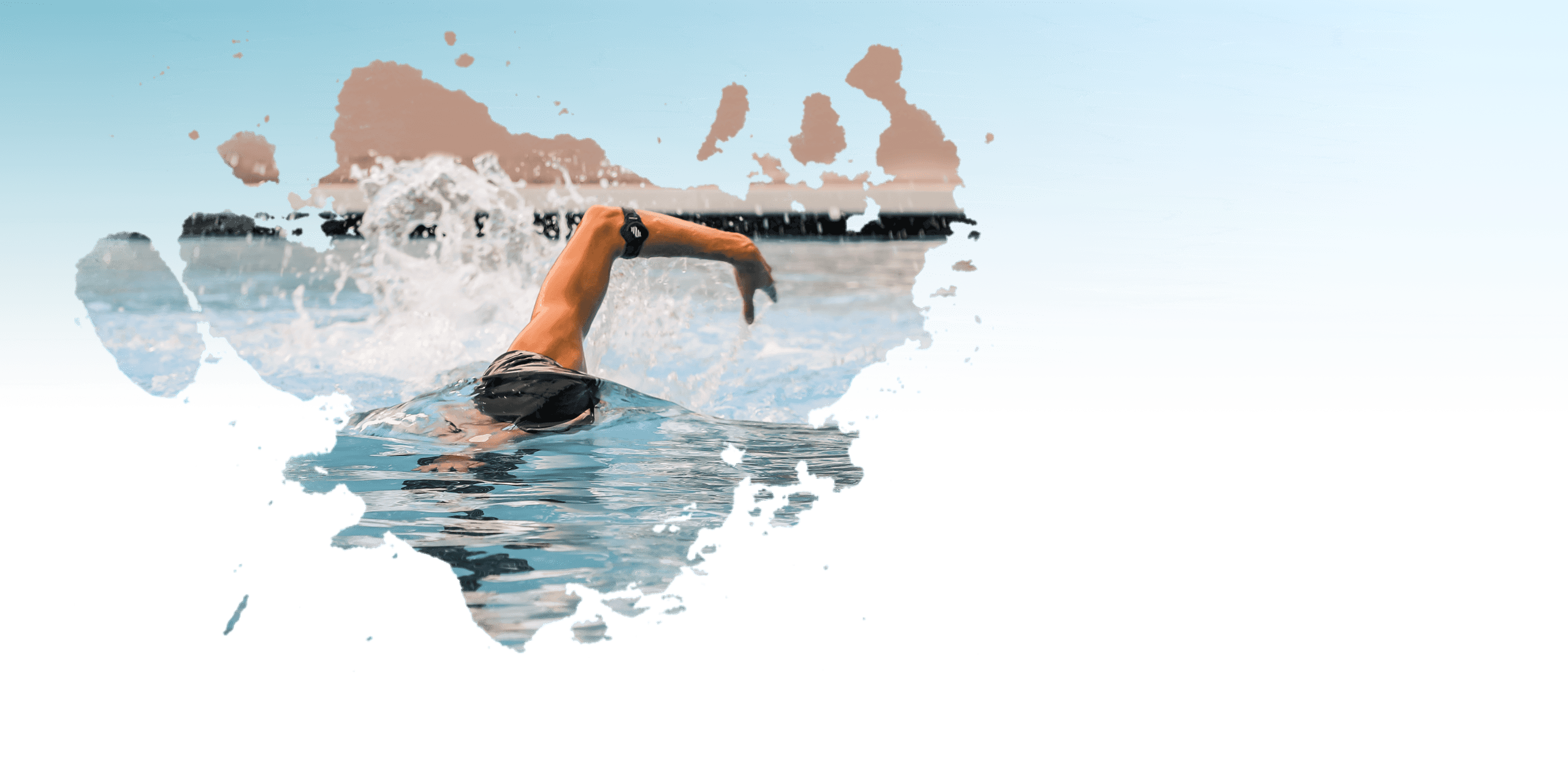
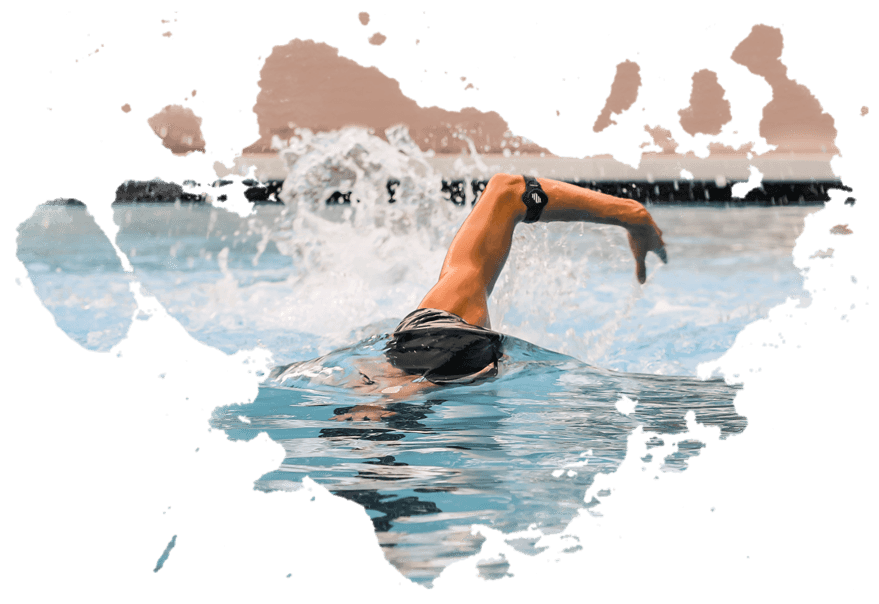
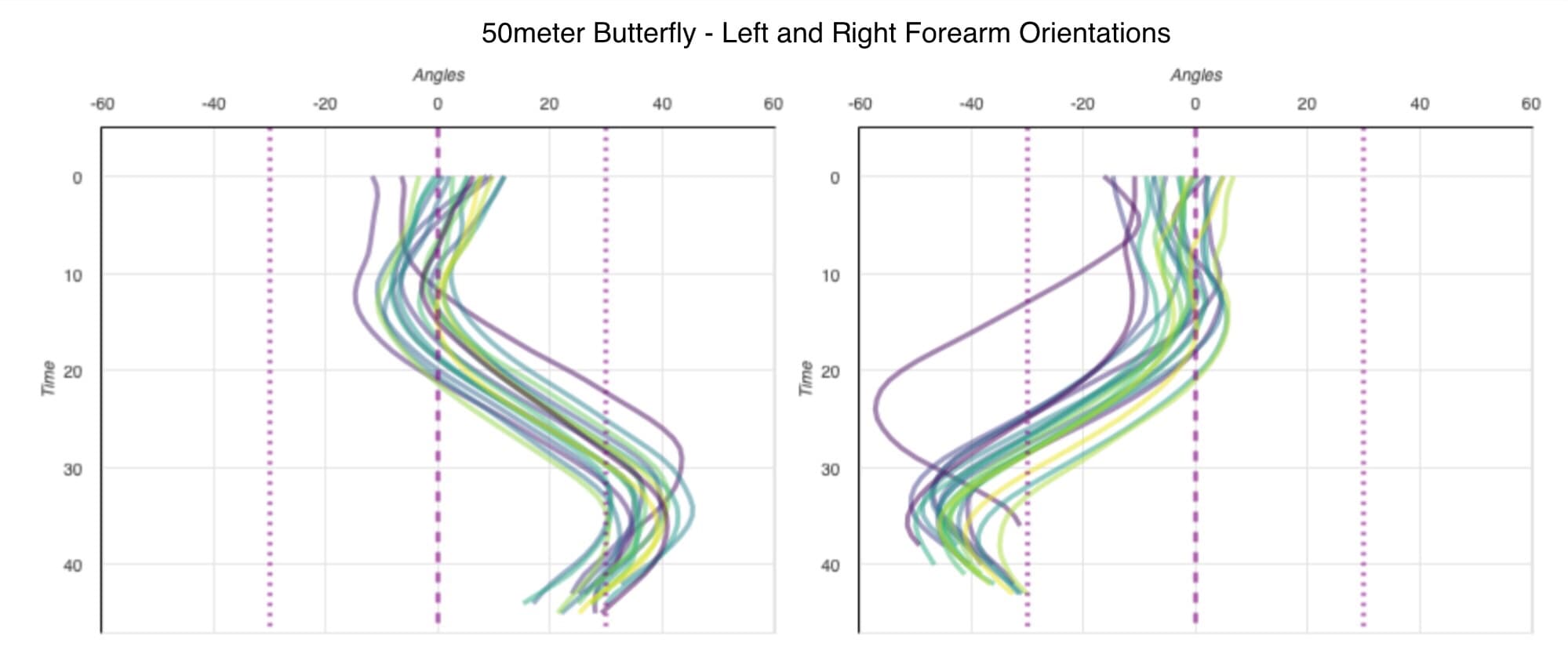
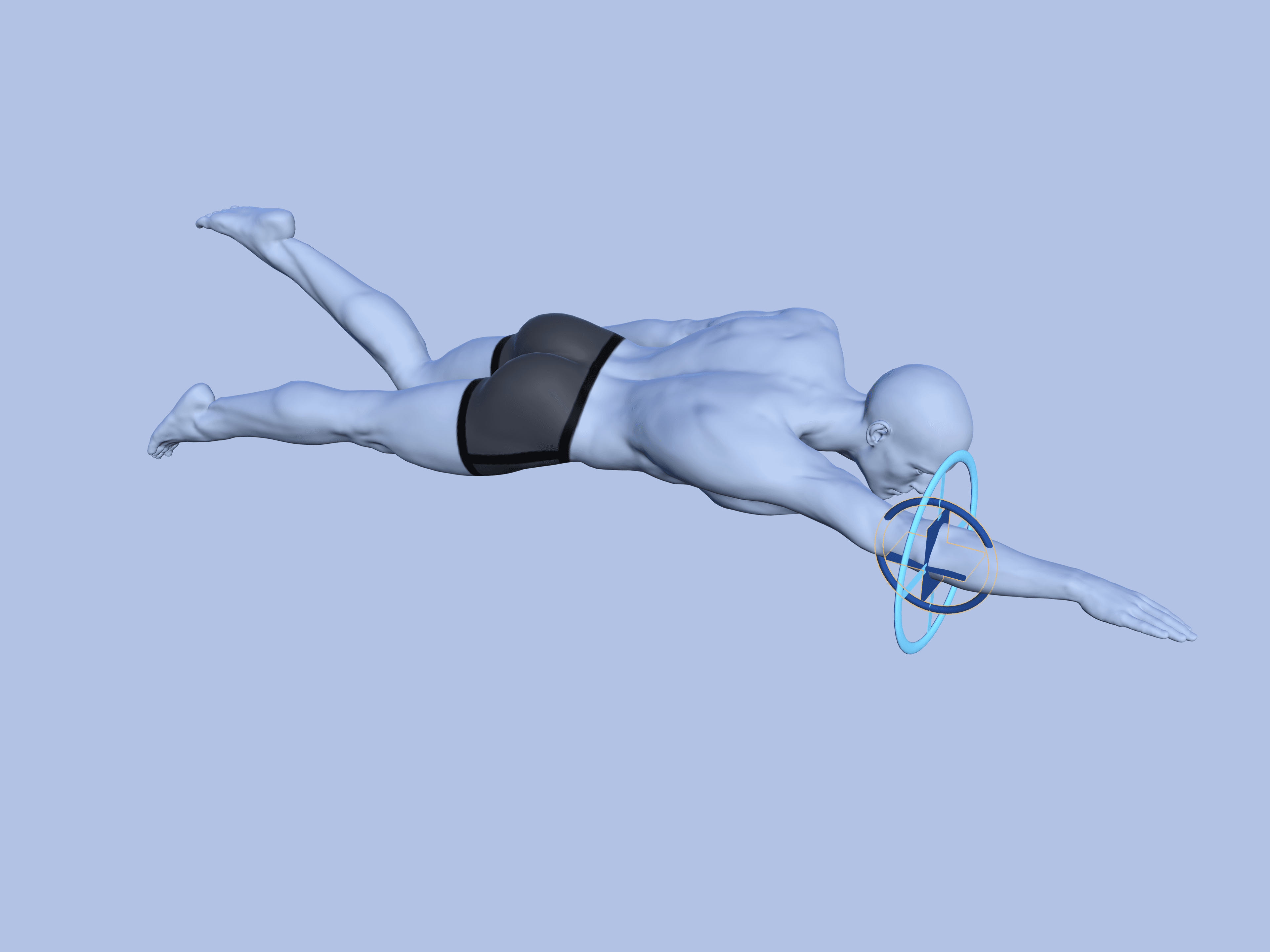
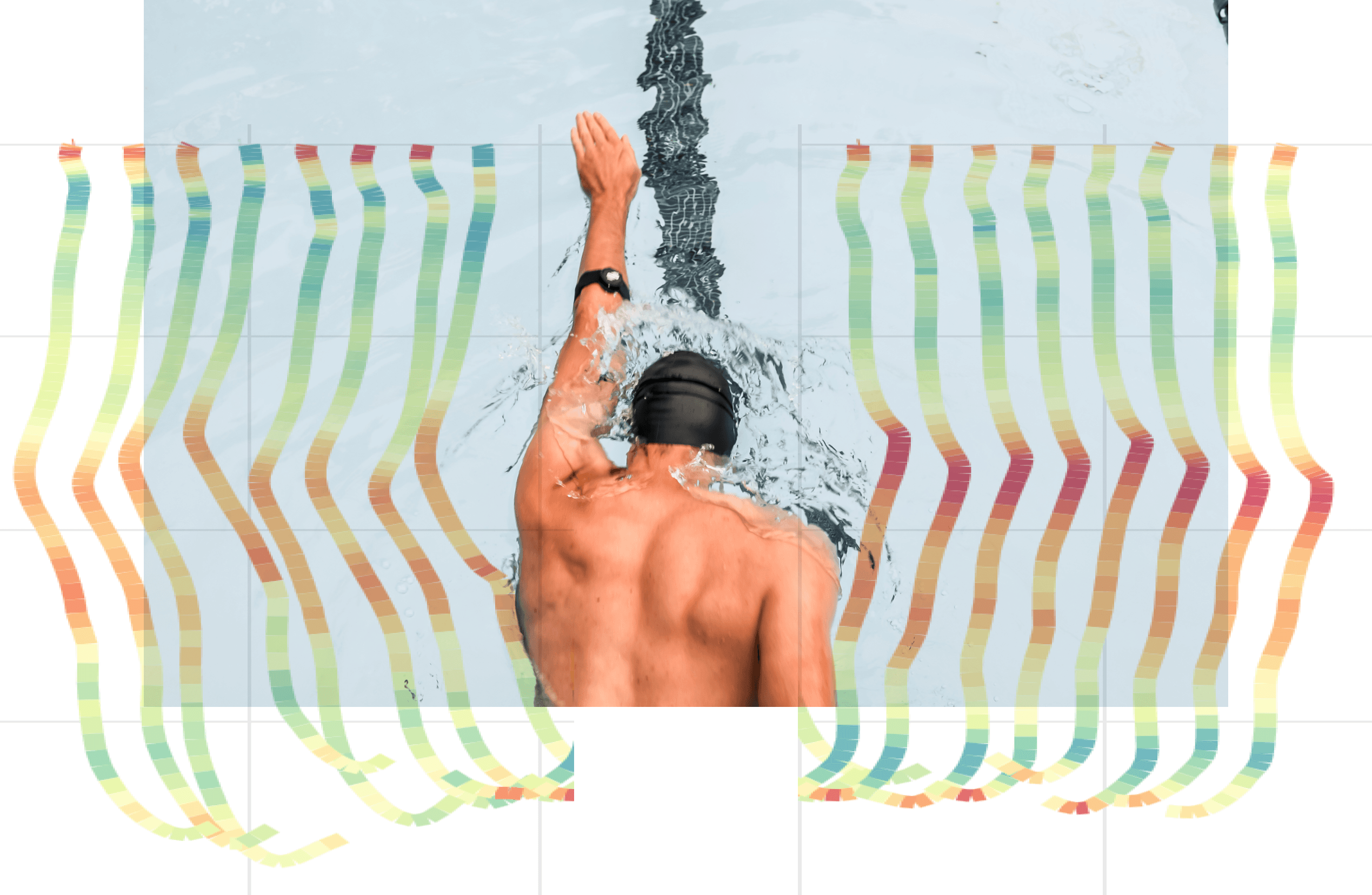
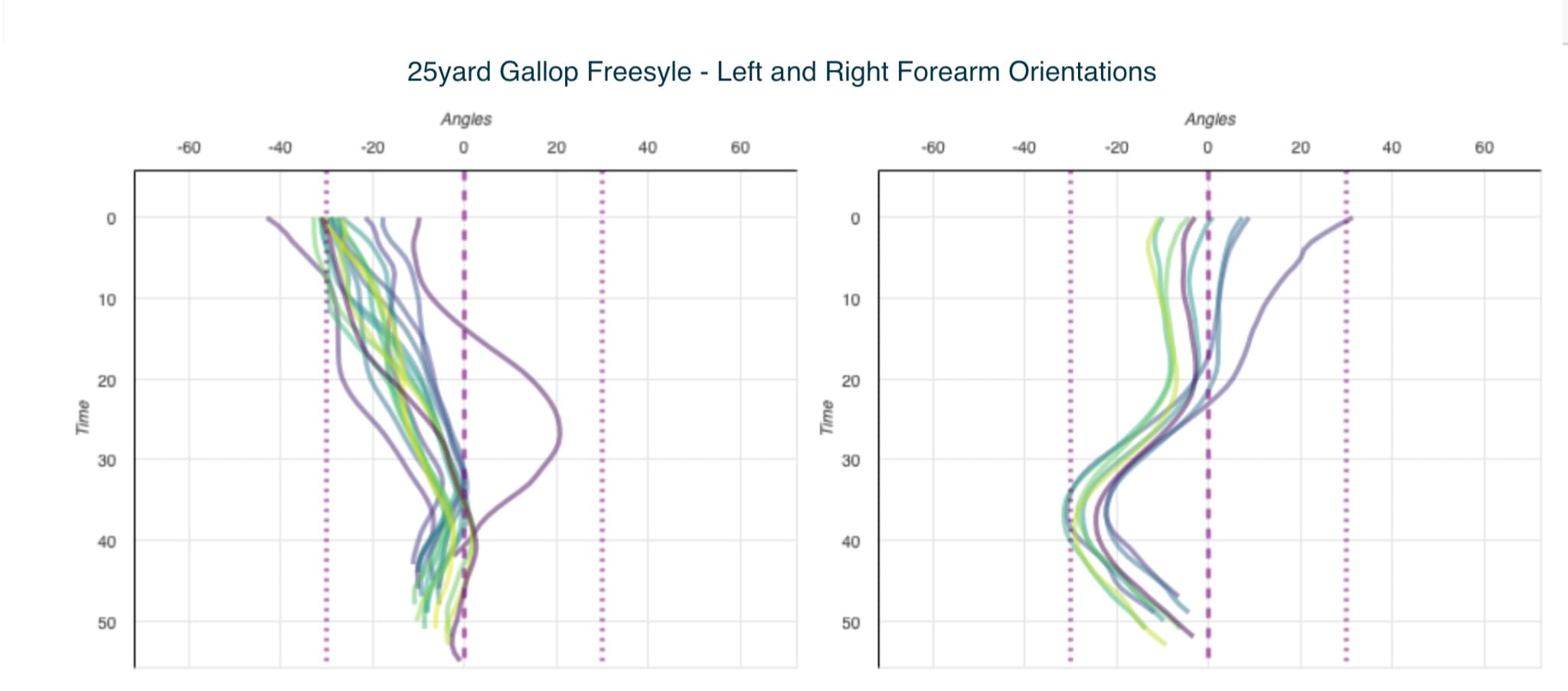
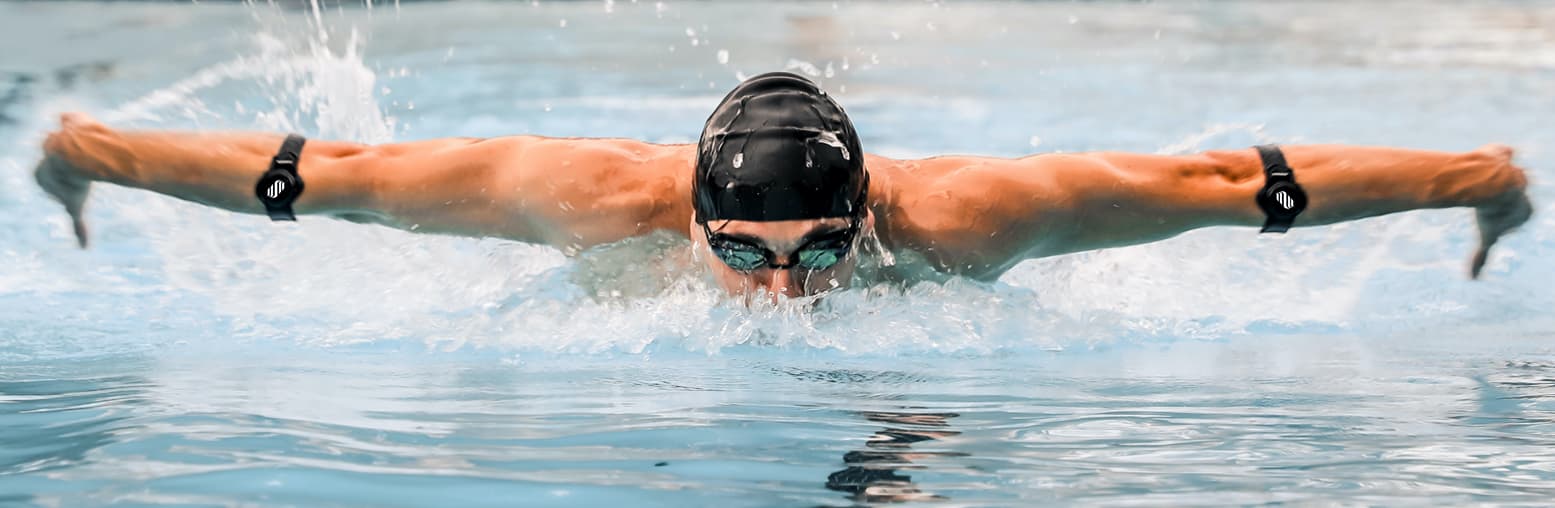
Morphwear sensors worn on the forearms capture roll and pitch angle continuously through every stroke cycle. Roll angle reveals whether the hand is tracking inside the elbow — a key marker of an efficient catch. Pitch angle tracks the forearm's progression from flat entry to vertical catch, identifying which phase of the stroke the arm is in at any moment. Multiple strokes are overlaid to show consistency stroke to stroke, and compared against elite reference data.
Where this is going
When technique meets performance data
Pitch angle does more than describe forearm position. As it changes from 0° to 90°, it marks which phase of the pull the arm is in — entry, catch, pull-across, push. Overlaid against continuous force, velocity, and power data, that timing becomes a key: it shows exactly what happens to propulsion at each moment of the stroke.
Patterns that were invisible on video become visible on a chart. The methodology is being deployed today through coached sessions. Early results are significant.
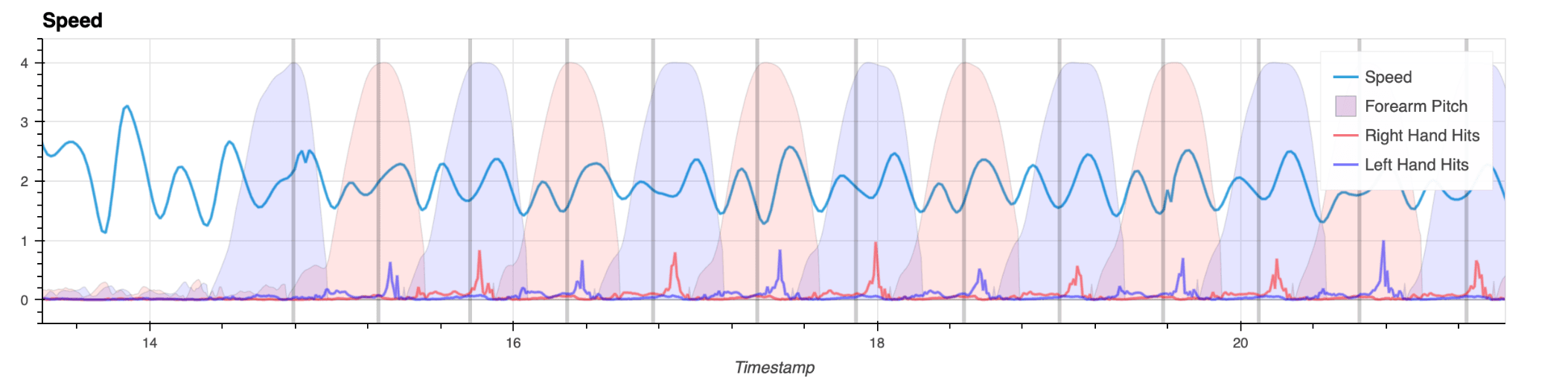
Stroke-phase timing from Morphwear sensors overlaid against T-Apex force, velocity, and power output. Session data from early deployments.
The goal is to send an athlete to the Olympics using this system. The work is underway.
About Morphwear
Konrad Antoniuk is the founder and sole architect of Morphwear. A 2012 Olympic Trials competitor, he has spent the last several years developing motion-analysis methodology for competitive swimming — work he now deploys directly with athletes through private coaching in Valencia, CA. Every session is both a coaching engagement and a live test of the methodology.
What's coming
Morphwear sensor kits for individual athletes.
Sensors, firmware, and analysis tools available to purchase for training outside of coached sessions. The near-term priority.
Expanded elite reference library.
Stroke pattern data for comparison and target-setting across strokes and age groups. Currently used in sessions; broader dataset in active development.
Fused stroke and performance analysis.
Morphwear stroke-phase timing layered against continuous force and velocity output — early session results are significant. Broader release pending further data collection.
Mobile app.
Session review on your phone — stroke data, prior session comparison, progress tracking. In development.
Group clinics
Morphwear clinics bring the full sensor and analysis methodology to small groups — competitive teams, club squads, or serious training partners. A pilot ran in January 2026 with strong early results. If you're interested in a clinic for your team or group, reach out directly.
konrad@morphwear.co →